
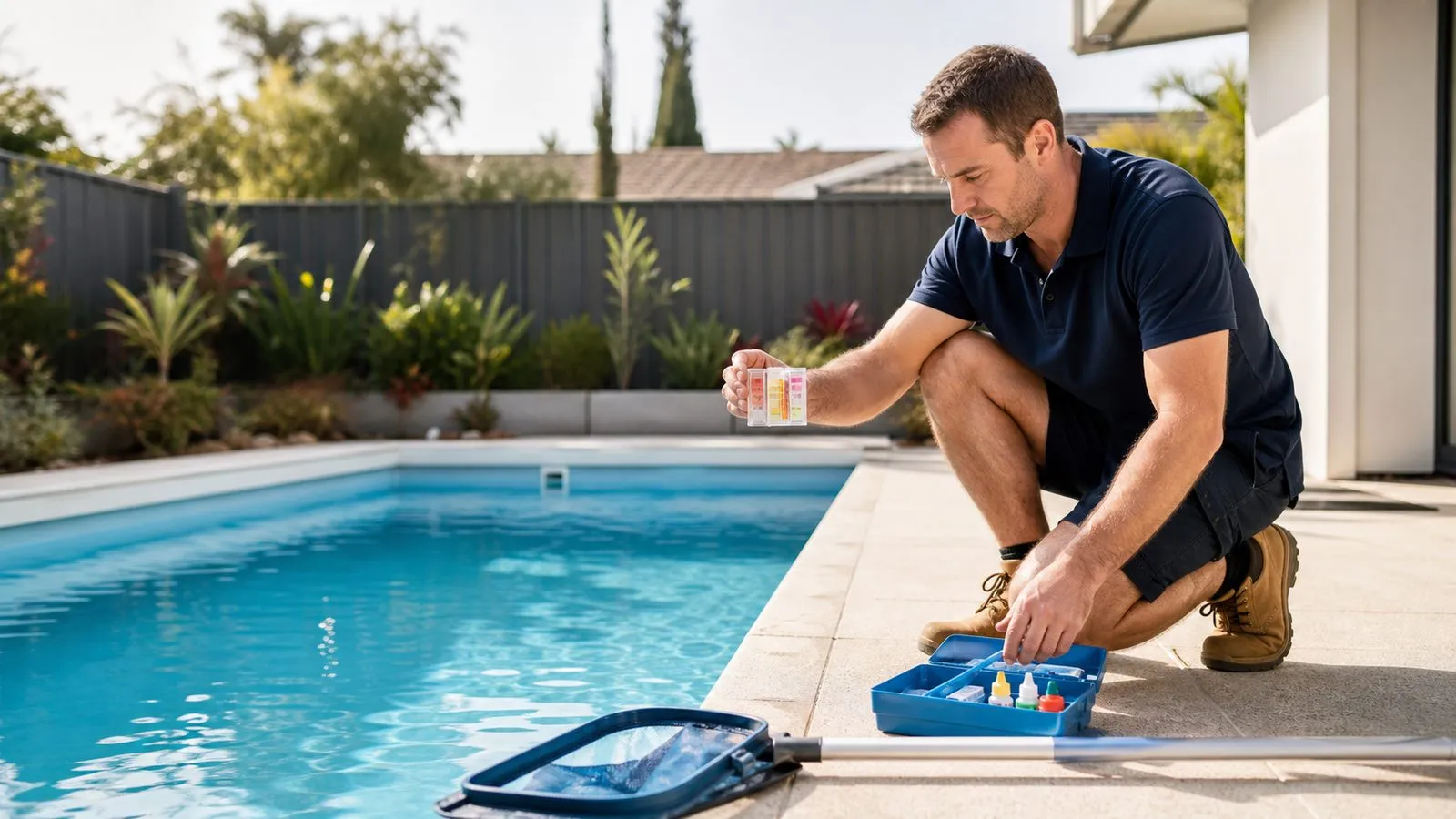
What do you need the cover to do?
Start by deciding what problem you want to solve. Reducing evaporation, retaining heat, catching leaves and making daily operation easier are related aims, but they do not lead to the same product. Write your main aim first and list the others as preferences. That makes it easier to compare two proposals that use different materials and operating systems.
A floating bubble cover, a fitted mesh debris cover and a purpose-designed automatic cover have different behaviour. A cover that catches leaves may allow water through. A cover selected for thermal performance may need separate consideration of storage and handling. Ask the supplier to explain what the particular model does rather than relying on the word premium.
For a Pakenham homeowner, the most useful starting information is the actual pool shape, exposed water area and daily swimming routine. A product suited to a simple rectangle may become awkward around steps, a curved edge or a raised feature. The purchase should solve your routine in your yard, not reproduce a display pool whose access and shape are completely different.
Compare cover families on practical terms
A floating bubble cover lies on the water and is usually removed before swimming. It can be a practical choice when evaporation and heat retention are priorities, provided handling and storage are manageable. The roller and protective storage arrangement are part of the decision, not optional details to sort out after the cover arrives.
A mesh debris cover is designed around its fixing system and debris-control purpose. Ask how leaves are removed, how rain passes through and what work is needed to fit and remove it. Do not assume a mesh product provides the same evaporation or thermal performance as a floating cover. Compare the specifications for the actual products offered.
Automatic systems introduce another set of considerations: motor access, tracks or other guiding arrangements, obstructions, servicing and the procedure after a fault. Their convenience can be useful, but the site must suit the system. Ask how it is operated when power or a control fails. No ordinary cover should be treated as a substitute for the pool barrier or active supervision.
| Cover family | Main comparison | Question before choosing |
|---|---|---|
| Floating bubble | Evaporation, thermal performance, handling | Where will the rolled cover be protected? |
| Mesh debris | Debris retention and fixing method | How will leaves be removed? |
| Automatic | Site fit, operation and service access | What is the fault and manual recovery procedure? |
Measure the water, obstacles and handling space
Give the supplier a plan showing the waterline shape and any steps, ladders, handrails or water features. Include photographs taken from both ends and from the planned roller position. Do not send only the builder's nominal pool dimensions if coping, raised edges or installed accessories change the usable space. The exact measurement method should come from the cover supplier.
Measure the available storage and walking area as carefully as the pool. A roller needs a position where the cover can move without scraping, twisting or catching. Look at the route people take from the house to the gate. A technically suitable cover becomes inconvenient if every swim starts by moving furniture or lifting a heavy roller across a narrow path.
Ask who will confirm final dimensions before manufacture or cutting. A supplier may want to measure on site, especially for an irregular shape or automatic installation. Keep the agreed drawing with the quote. Mark items that remain uncertain. That is more useful than assuming the installer will infer a raised step from a photograph taken at an angle.
Can you manage the cover every day?
Think through a normal weekday swim from beginning to end. Who removes the cover, where do they stand, how is the cover stored and who replaces it afterwards? If only one household member can operate it, the pool may spend long periods uncovered when that person is away. Choose a system the intended users can manage safely.
Ask for a demonstration of the proposed operating method or a clear model-specific demonstration video. Pay attention to the start and finish, not just the middle where the cover is already moving smoothly. Handling difficulties often occur while releasing straps, aligning the leading edge or securing the rolled cover. Check how the system accommodates the actual pool shape.
A powered option may reduce manual effort but does not remove the need to inspect for obstacles and keep swimmers clear during operation. Ask how the controls are located and used, how access is controlled and what the emergency procedure is. Keep the operating instructions available to every responsible adult. Never allow children to play on, under or around a moving cover.
Work out where the cover lives when removed
A cover spends part of its life off the water, and that storage affects its condition. Follow the manufacturer's requirements for protecting a rolled or folded cover from sunlight and heat. Do not assume a material that floats in the sun can be left in a concentrated roll without protection. Ask whether a storage cover is included and how it is fitted.
Choose a place that avoids sharp edges, pets, garden tools and foot traffic. Keep the roll clear of gate movement and equipment access. In a compact Officer backyard, a storage position may need more thought than the cover itself. Sketch the pool in both states: covered and ready for swimming. Check that essential routes remain usable in each.
Decide how debris will be removed before the cover is rolled. Pulling a leaf-covered blanket across the water can put the collected material straight back into the pool. Ask which cleaning methods are suitable for the material. A household cleaner or abrasive brush that seems harmless on paving may damage the cover, its coating or its seams.
Review water care when cover use changes
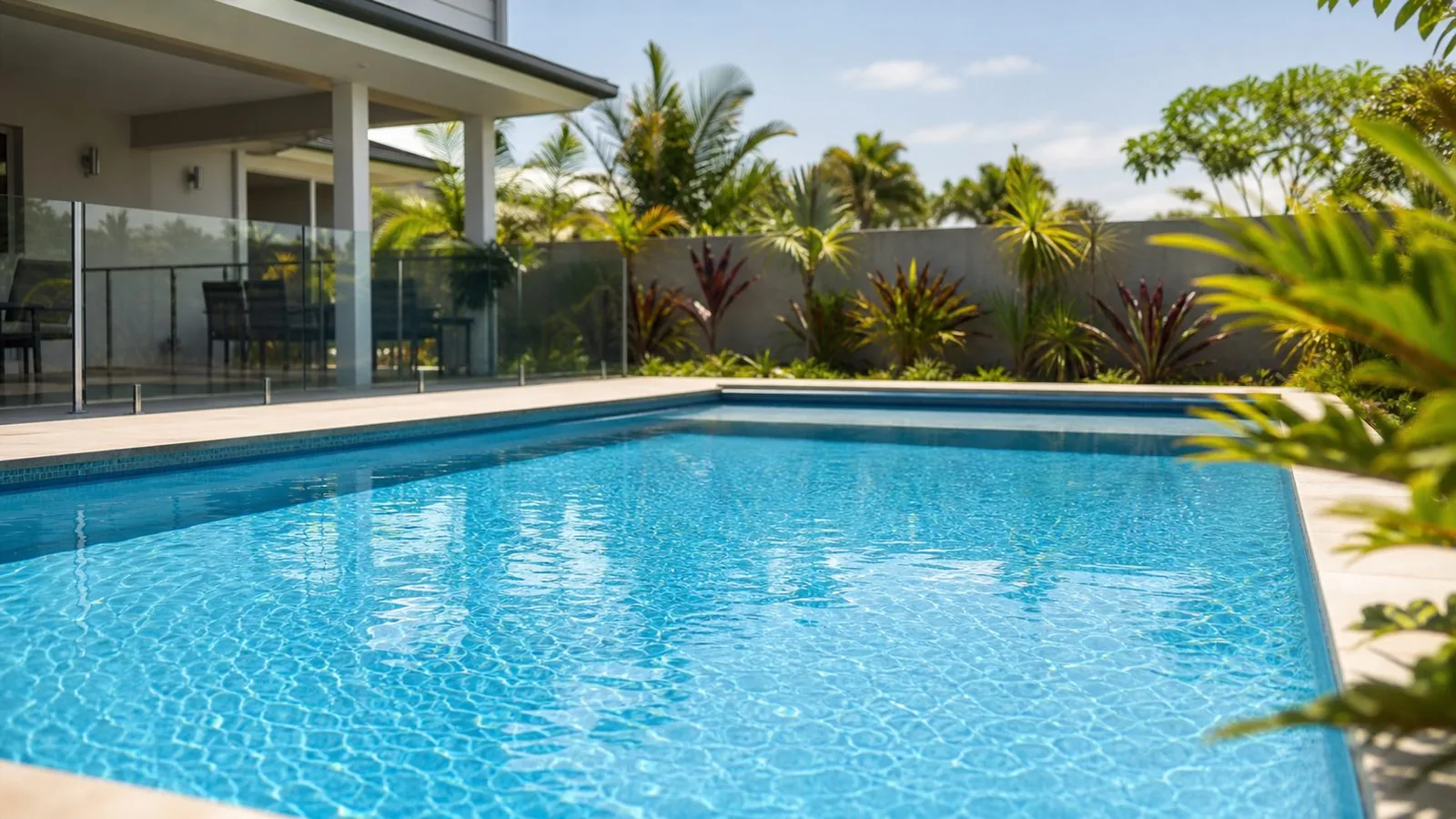
Cover use changes the pool environment, so water testing remains necessary. Tell your pool technician whether the cover is on overnight, most of the week or only during longer absences. Those patterns should be part of the operating discussion. Do not copy a fixed chlorinator reduction from someone with a different pool and assume it will hold your readings.
Check the cover manufacturer's limits for water chemistry and treatment procedures. After any stronger treatment, follow the required conditions before replacing the cover. Product guidance may specify when the cover must remain off. Record what was added and when, then verify the relevant readings rather than relying on smell or the time shown on a clock.
Watch the first period of regular cover use while you are at home. Compare water tests and equipment operation with the previous routine. Ask for an explanation of any recommended setting change. A cover is not a way to avoid sanitation, filtration or water testing; it is another component whose operating conditions need to fit the rest of the pool.
Compare quotes by what is included
Ask each supplier to describe the material, dimensions, fitting method, roller or drive system, storage protection and installation work. A price for the cover sheet alone cannot be compared directly with a complete fitted system. Keep optional accessories separate so you can see which items are required for ordinary operation and which are conveniences.
Ask what site preparation is needed and who performs it. An automatic system may require coordination with other trades. A manual system may still need a suitable mounting or storage arrangement. Request a clear description of how the proposed installation avoids obstructing access and how it will be demonstrated at completion. Do not accept an unexplained instruction to alter a barrier or gate arrangement.
For aftercare, ask where replacement parts come from, which tasks belong to the owner and how faults are assessed. Read the actual written warranty terms rather than treating a headline duration as a promise about every component. Keep product care requirements with the quote. A good comparison records what you must do to maintain the product as well as what the supplier provides.
Match the system to the household
Hypothetical example: a Pakenham family wants to reduce overnight evaporation but swims on most suitable afternoons. The pool is rectangular and has a clear space at one end. A manageable floating cover and roller may be worth investigating because the removal routine fits the way they use the pool. The final choice still depends on dimensions, product suitability and a handling demonstration.
Now consider a different home with an irregular pool, a narrow path and a raised water feature. Copying the first family's arrangement could create snagging and storage problems. This household needs a site-specific handling discussion before comparing material grades. A more expensive material does not solve an obstructed path or a cover that cannot be aligned easily.
A third household mainly wants to keep seasonal leaves out while the pool is rarely used. Debris collection and fitting effort may matter more than daily removal speed. The useful comparison changes with that goal. Put the intended use at the top of every supplier enquiry so the recommendation is based on the actual task rather than the product they happen to show first.
Recognise wear without making it worse
Inspect the cover during normal handling for brittle areas, damaged seams, torn straps or a change in how it rolls. Photograph the issue and the location. If a bubble cover sheds fragments or a drive system starts moving unevenly, stop forcing the operation and seek model-specific advice. Repeatedly pulling harder can damage both the cover and surrounding fittings.
Look for an underlying cause before ordering the same replacement. Snagging at a handrail, contact with rough paving, unsuitable storage or water chemistry outside product limits may explain repeated damage. Keep test and treatment records if deterioration is being assessed. They help distinguish operating conditions from a material or installation problem.
Do not patch a cover with an arbitrary adhesive or modify tracks and straps without supplier guidance. A repair material may be incompatible, and a changed fitting can affect the way forces are transferred. Ask whether a repair is suitable, what result is realistic and how the repaired area should be checked. Replacement is sometimes sensible, but it should follow a diagnosis of why the previous cover failed.
Prepare an enquiry that gets a useful answer
Send a sketch of the pool, photographs of obstacles and the proposed storage position, and a short description of the main goal. State who will normally operate the cover and whether they will be alone. Mention heating, water features and existing cover equipment. These details let a supplier identify a poor fit early instead of discovering it during installation.
Ask for a recommendation that explains the trade-offs in plain language. Which goal does this cover serve best? What will still need to be done manually? What changes to water care need discussion with the pool technician? What happens if the equipment stops during operation? Keep the answers with the product specification so a later purchase decision can be checked against the original need.
After installation, use the demonstrated process and observe how the cover behaves across several ordinary uses. Report snagging or uneven movement early. Store the manual, photos and care notes with your pool records. A cover earns its place when it is used consistently and safely, and that depends as much on fit and handling as on the material itself.